top of page

ORCUTT'S COYOTE
SCIENTIFIC NAME: Canis latrans orcutti

COMPORTAMIENTO

Orcutt's coyote likely possessed a variety of social structures, as documented in its living descendants: red wolves, eastern wolves, & the modern coyotes. While capable of forming coalitions, monogamous family groups & small packs to guard food & territories, newly dispersed & vagrant coyotes are often solitary.
DIETA

Isotope & cranial morphology studies suggest Pleistocene coyotes were competing with larger predators, with portions of their diet including the remains of ungulates & ground sloths. However, their adaptability to environmental changes allowed coyotes to adopt an opportunistic, omnivorous, mesocarnivore niche, sustaining their ancestry into the Holocene.

HÁBITAT
Like its modern relatives, Orcutt's coyote was likely suited to survive across numerous habitat types during a given time. Over the course of Rancho La Brea's fossil record, coyotes shifted their habitat preferences from prairie & shrubland to forest & marshland with the Late Pleistocene megafaunal extinctions.
STATS
ESTIMATED MASS: 25 kg
HEIGHT AT SHOULDER: 60 cm
GROUP SIZE: 6
TEMPORAL RANGE: 40,000 - 11,000 yr BP

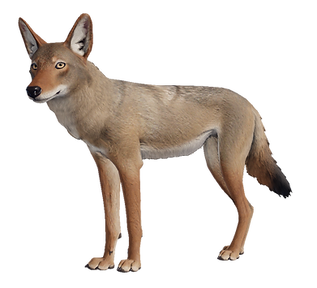
NAME: Bandito
TYPE: Variant
TIER: Default
COST: Free
COAT VARIANTS

© Derechos de autor
bottom of page